GREEN IN THE GRID by Swathi Vandkar
Revitalizing Heritage : Retrofitting a historic residential building to meet future energy standards
Project Type
Energy Retrofit & Building Performance Analysis · Residential
Date
July 2023
Location
Berlin, Germany
This project explores the transformation of a large, abandoned industrial land parcel located in the heart of a dense metropolitan city. Once an active textile mill, the site had been left vacant for years, creating a physical and social void within an otherwise vibrant urban core.
Rather than treating the site as an isolated redevelopment opportunity, the proposal positions it as a city-making intervention, one that reconnects fragmented urban fabric, relieves surrounding pressure points, and introduces new public life into the city center.
WHERE HISTORY MEETS PERFORMANCE
"Preserving the past doesn’t mean standing still—sometimes it’s about upgrading wisely, not replacing recklessly."
Existing Condition of the building
A historic building, out of step with today’s standards.
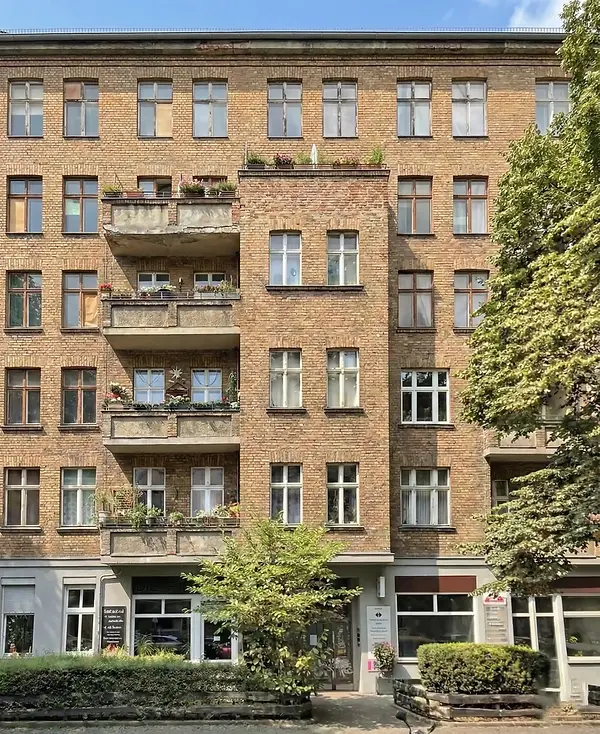
Tegeler Strasse 35, built in 1910, is architecturally rich but technically outdated. The building suffers from high heat loss, uninsulated walls, and inefficient windows, while natural ventilation and old heating systems dominate energy use. Energy analysis shows that transmission losses account for the majority of its inefficiency, placing the building at Energy Class E with a high primary energy demand.


Existing building envelope and energy analysis
Existing technical condition of the building
THE RENOVATION GOALS
Balancing heritage with performance
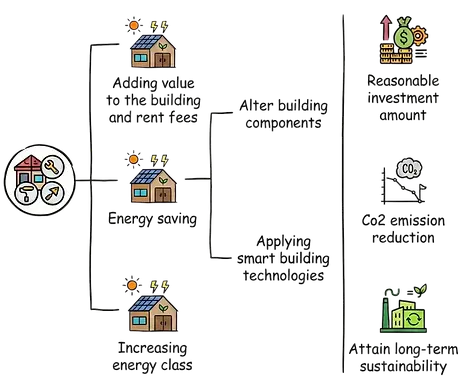
The renovation aims to transform the century-old building into a sustainable, energy-efficient asset while preserving its historic character. The core objectives:
-
Energy Efficiency: Reduce transmission losses and lower energy demand through envelope upgrades and renewable integration.
-
Sustainability & Ecology: Minimize CO₂ emissions and implement responsible resource management, including rainwater harvesting.
-
Technological Integration: Introduce smart systems to optimize heating, lighting, and overall user comfort.
THE RENOVATION CRITERIA
A data-driven approach
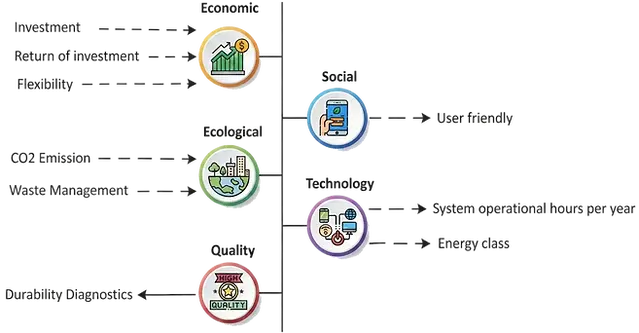
Interventions were evaluated through a weighted decision matrix across four categories: Social, Economic, Technological, and Ecological. Key criteria included:
-
Investment & ROI: Cost-effectiveness and payback period
-
Flexibility & Tenant Impact: Legally and practically feasible solutions
-
CO₂ Reduction & Energy Class: Maximize sustainability gains
-
Durability & Convenience: Long-lasting materials and improved comfort
STRATEGIC INTERVENTIONS
Designing performance, not prescribing it

To reach Energy Class B while maintaining economic feasibility, the retrofit strategy followed a two-layered approach. Rather than relying on standard specifications, each intervention was tested and refined through CAALA simulations, allowing performance, material impact, and return on investment to guide the design.
Reworking the Envelope
Where the biggest losses became the biggest opportunities.
The building envelope became the key driver of energy reduction, with multiple retrofit scenarios tested to balance thermal performance and ecological impact.
High-Performance Windows
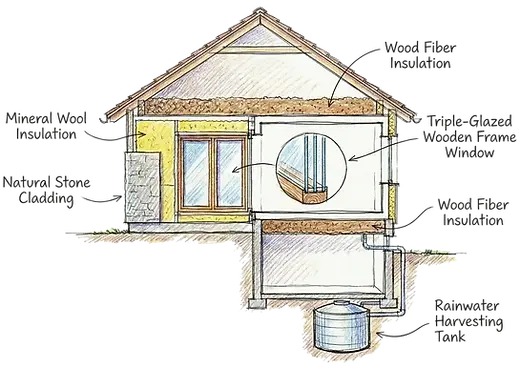
Triple glazed wooden windows replace the inefficient existing frames, achieving a U value of 0.9 W/m²K. This choice reduces primary energy demand by 12% while keeping the building’s original character and lowering embodied carbon.
Façade Insulation Strategy
The uninsulated exterior walls were upgraded with a 25 cm mineral wool and natural stone system, reducing the wall U value from 1.40 to 0.142 W/m²K. This single move significantly improved thermal performance and pushed the building close to near passive standards.
Roof & Basement Sealing
Closing the thermal envelope was essential. Wood fiber insulation was added to the attic floor and basement ceiling, cutting major thermal bridges and lowering primary energy demand by around 5 to 6 percent per surface, while also meeting ecological goals.
Ecological Stewardship
Closing the resource loop:
An 18-ton underground rainwater harvesting system was integrated into the site to collect and reuse rainwater for landscaping and other non-potable uses. This reduces freshwater demand and supports a more resource-efficient building system.

Technological Integration
Optimizing performance through smart systems
Once the architectural load was reduced, smart systems were introduced to fine-tune how the building operates day to day.
A 25.6 kWp photovoltaic system was installed on the 124 m² rooftop and paired with battery storage to improve on-site energy use and reduce reliance on the grid. The system is expected to generate over 25,000 kWh per year.
Heating control was upgraded with Bosch digital thermostats connected to a central smart controller. By responding to real-time room use and temperature, the system avoids overheating and improves efficiency, saving an estimated 59,240 kWh of gas annually.
In shared spaces, smart sockets and radar-based motion lighting limit electricity use to active periods only, reducing standby consumption and unnecessary energy loss.

PERFORMANCE ANALYSIS AND IMPACT
Heritage preserved. Efficiency unlocked.
The retrofit transforms the building from a century-old energy drain into a high-performance building, delivering measurable ecological, economic, and technological benefits.
Energy & Carbon Reduction
Sealing the envelope and integrating a 25.6 kWp PV system cut primary energy demand by 52%, elevating the building from Energy Class E to B. Combined strategies also reduce annual CO₂ emissions by 47%, contributing directly to Berlin’s climate goals.
Financial Viability (ROI)
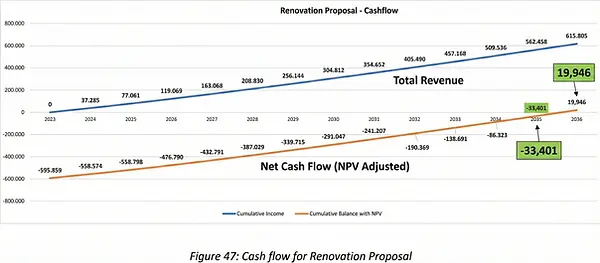
Sustainability here is also economically sensible. Operational savings of approximately €33,000 per year from gas reduction and self-generated electricity create a payback period of 12 years, proving that high-performance retrofits can be both responsible and profitable.
Smart Readiness
Digital upgrades prepared the building for future grids. The Smart Readiness Indicator (SRI) increased from 19.4% to 31%, reflecting enhanced building intelligence through automated heating, smart thermostats, and motion-sensor lighting—transforming the structure into a responsive, communicative asset.

DESIGNED TO LAST
The most sustainable building is one that continues to perform.

€600,000 total investment, achieving a return on investment within 10–12 years, demonstrating long-term financial feasibility for historic retrofits.

25% of the building’s total electricity demand is met through on-site renewable generation using the proposed renovation strategy.

Up to 57% reduction in energy losses, resulting in significantly improved overall energy performance and efficiency.

Digital and smart building systems deliver high impact at relatively low cost, offering substantial energy savings with minimal disruption.